
Electrolyzers
A comprehensive hydrogen production system with capacities ranging from 4kg to 2000kg per day and power options from 10kW to 5MW. These systems include water preparation stations, dedicated power supply, and control mechanisms. Optional features include waste heat recovery and hydrogen purification.
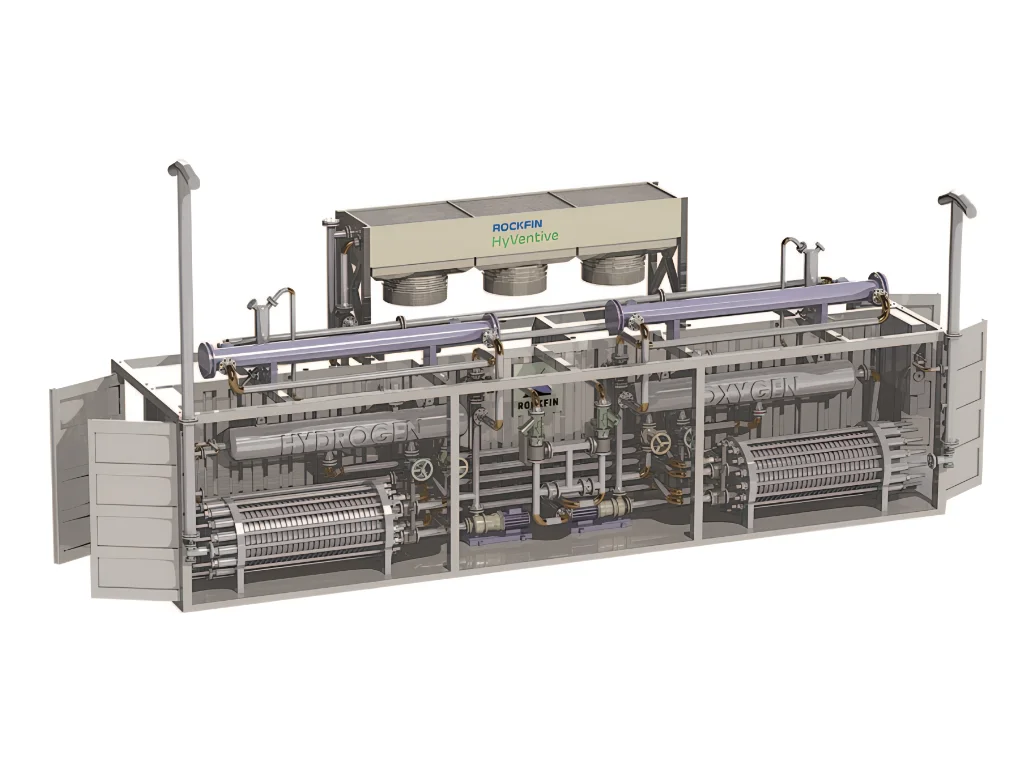
How the R-GEN.A Hydrogen Generator Works
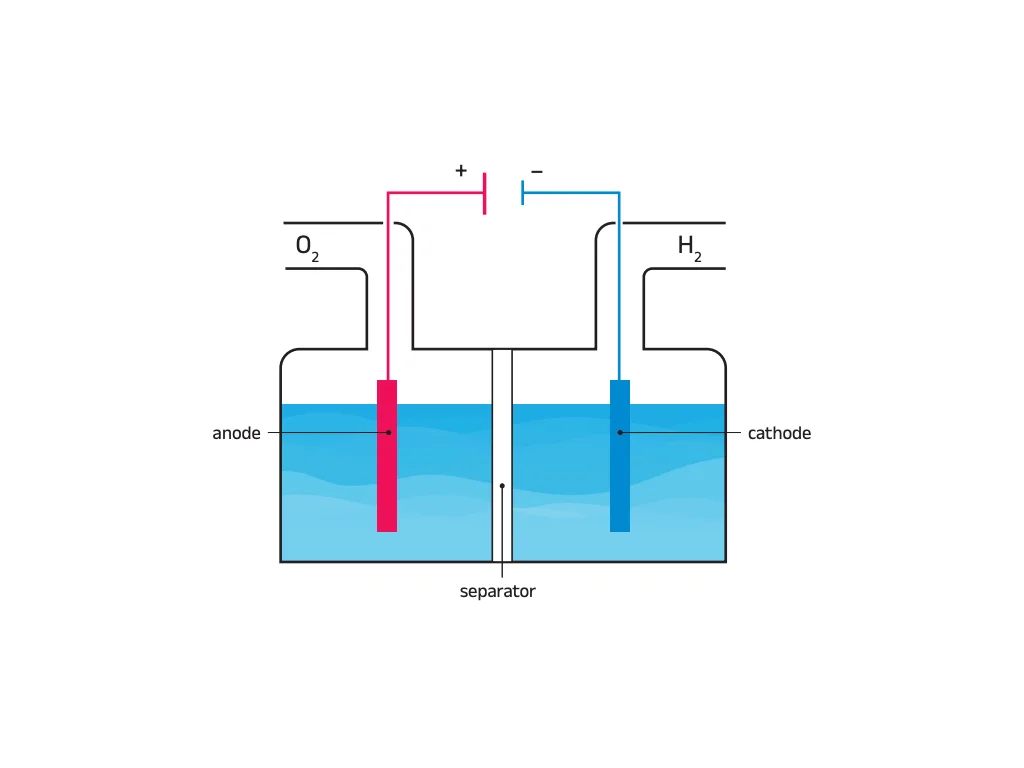
The operation of R-GEN.A hydrogen generators is based on the most mature and proven method of hydrogen production from water – alkaline electrolysis. Alkaline water electrolysis is a process that decomposes water (H₂O) into hydrogen (H₂) and oxygen (O₂) using an electric current passed through an aqueous alkaline solution (electrolyte) between two electrodes: the anode (positive) and the cathode (negative), both housed within an electrolyzer stack. During this process, hydrogen is released at the cathode and oxygen at the anode. A membrane separates the electrodes, effectively isolating the hydrogen and oxygen gases. This not only enhances the purity of the resulting gases but also significantly improves the safety of the entire process. Water from the electrolyte is gradually consumed during operation and is continuously replenished. To produce 1 kg of hydrogen approximately 9 litres of water are required. Consequently, the production of 1 tonne of hydrogen – an energy equivalent to about 2,100 litres of E10 petrol – requires as much water as an average Polish household consumes in one month. In addition to water, the production of 1 kg of hydrogen necessitates the input of approximately 51 kWh of electrical energy into the electrolyzer stack.
R-GEN.A Design
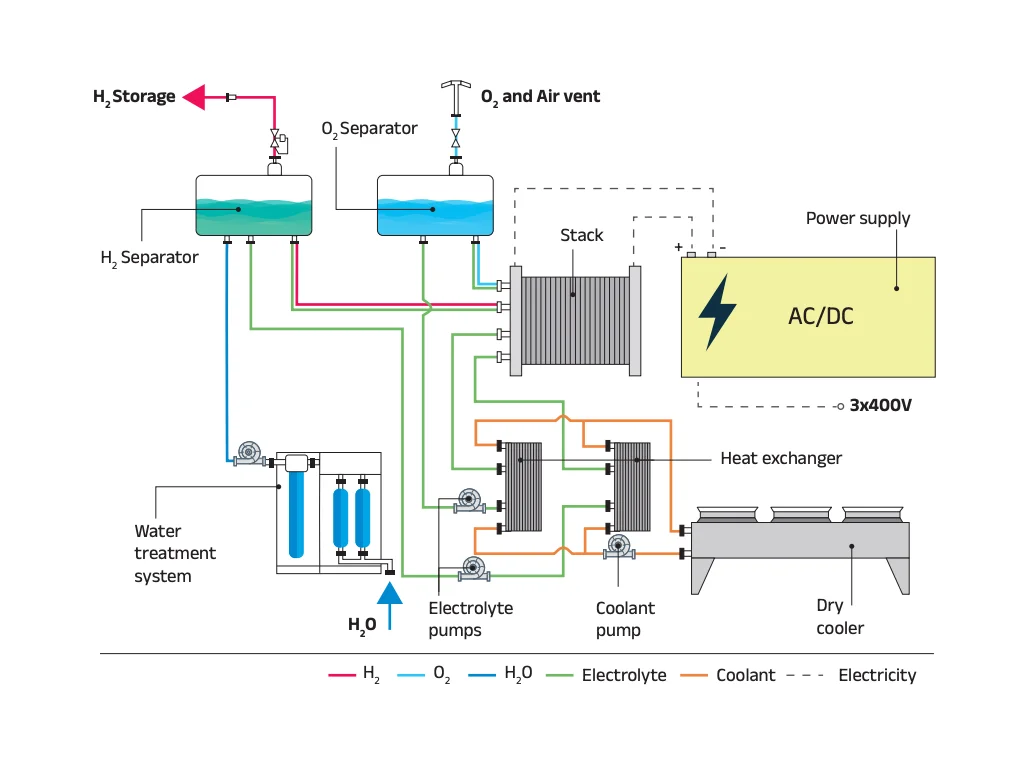
At the heart of the R-GEN.A series hydrogen generator is at least one stack where the electrolysis process takes place. Electrolyte flows constantly through the stack, which has 3 very important functions:
- First of all, it consists of 70% water, which is essential for the process itself.
- As the electrolyte flows through the stack, it takes with it the bubbles of the gases produced, which increases the efficiency of the process.
- It also cools the stack by taking away excess heat from it.
To ensure that the process runs safely and the purity of the hydrogen produced is high, the electrolyte circuits that flow through the cathode and anode chambers have been separated. As a result, the electrolyte in the cathode circuit contains only hydrogen bubbles, and the electrolyte in the anode circuit, only oxygen. Both streams of gassed electrolyte go into different separation tanks, where the gas is separated from the electrolyte. The hydrogen undergoes preliminary drying and is directed to further processes such as purification and compression. Oxygen is released into the atmosphere. The electrolyte, on the other hand, is cooled in heat exchangers and directed back to the stack.
Since water is lost from the system during electrolysis, it is necessary to constantly replenish it. Also as all impurities introduced with the refilled water would be concentrated, it is necessary to take very great care to ensure that the refilled water is chemically pure. The water preparation system supplied with the generator is responsible for the proper water quality. The electrolysis process requires a specialized power supply. A direct current of high amperage and relatively low voltage is supplied to the stack. In addition, its source is required to have very low ripple and high efficiency. Such power supplies are standard equipment for any R-GEN hydrogen generator.
Delivery Scope of Hydrogen Generators R-GEN.A
Standard Equipment
- Electrolyzer
- Cooling system
- Rectifier
- Water treatment system
- Container
- Preliminary gas dryer
- Nitrogen purge system
- Control system including touch control panel and Communication interface
- Safety systems
Additional Equipment
- LV/MV transformer
- Heat recovery system
- Hydrogen purification system
- Hydrogen Compressor (> 30 bar)
- Hydrogen storage R-PACK
- Certified gas analyser
- Certified gas flowmeter
- Low temperature insulation (below -20°C)
Services and Maintenance
- Transport and unloading at site
- Additional maintenance for storage
- Making connections between system components
- Connecting the system to utilities
- Participation in commissioning
- Training of personnel
- Periodic maintenance and servicing
Main Advantages of R-GEN.A
Durability: The design based on proven components and the high standards of project implementation at Rockfin are a guarantee of the long-term reliability of R-GEN generators.
High Energy Efficiency: Alkaline electrolyzers achieve efficiency levels comparable to other technologies while operating efficiently over a wide power range.
Proven Technology: Decades of use of alkaline electrolyzers are hard evidence, not just a declaration of their efficiency and reliability.
Cost-Effectiveness: Alkaline electrolyzers use readily available and inexpensive materials such as nickel-based catalysts and stainless-steel electrodes, avoiding the costly rare earth and platinum required in other types of electrolyzers.
Scalability: R-GEN.A hydrogen generators will work well as small laboratory installations as well as megawatt industrial installations.
Compliance with EU Directives and Industry Standards
R-GEN generators are CE marked and manufactured in accordance with the following industry directives and standards:
- MD 2006/42/EC – Machinery Directive,
- PED 2014/68/EU – Pressure Directive,
- EN 61508 – Functional safety of control systems,
- EN 61511 – Functional safety – Safety instrumented systems for the sector, process industry,
- EN 12100 – Safety of machinery – General design principles – Risk assessment and risk reduction,
- EN 60204-1 – Safety of machinery – Electrical equipment of machinery,
- EN 1127-1 – Explosive atmospheres – Explosion prevention and protection,
- EN 60079 – Series of standards for the safety of electrical equipment used in explosive atmospheres,
- EN 1090 – Construction of steel and aluminium structures,
- EN 764-7 – Pressure equipment – Safety systems for use in non-flame heated equipment,
- EN 13445 – Unfired pressure vessels,
- ASME BPVC VIII – ASME pressure vessel design principles,
- ISO 22734 – Hydrogen generators using water electrolysis,
- ASME B31.12 – Hydrogen piping,
- EIGA DOC 15 – Hydrogen systems,
- EIGA DOC 211 – Hydrogen discharge systems for commercial systems,
- EIGA DOC 121 – Hydrogen pipelines,
- ISO 14687 – Hydrogen fuel quality.
Hydrogen Generators' Examples
R-GEN.A.10.1.28
- Nominal Power: 10 kW
- Capacity: 2 m³/h
- Nominal Pressure: 28 barg
- LHV Stack Efficiency (BoL): 65,2%
- Capacity Control Range: 50–100%
R-GEN.AM.100.1.15
- Nominal Power: 100 kW
- Capacity: 20 m³/h
- Nominal Pressure: 15 barg
- LHV Stack Efficiency (BoL): 68,5%
- Capacity Control Range: 10–100%
R-GEN.A.500.1.30
- Nominal Power: 500 kW
- Capacity: 100 m³/h
- Nominal Pressure: 30 barg
- LHV Stack Efficiency (BoL): 65,2%
- Capacity Control Range: 50–100%
R-GEN.A.1000.2.30
- Nominal Power: 1000 kW
- Capacity: 200 m³/h
- Nominal Pressure: 30 barg
- LHV Stack Efficiency (BoL): 65,2%
- Capacity Control Range: 25–100%
R-GEN.A.2500.1.16
- Nominal Power: 2500 kW
- Capacity: 500 m³/h
- Nominal Pressure: 16 barg
- LHV Stack Efficiency (BoL): 65,2%
- Capacity Control Range: 50–100%
R-GEN.A.5000.2.16
- Nominal Power: 5000 kW
- Capacity: 1000 m³/h
- Nominal Pressure: 16 barg
- LHV Stack Efficiency (BoL): 65,2%
- Capacity Control Range: 25–100%
R-GEN.A.5000.10.30
- Nominal Power: 5000 kW
- Capacity: 1000 m³/h
- Nominal Pressure: 30 barg
- LHV Stack Efficiency (BoL): 65,2%
- Capacity Control Range: 10–100%
PEM TYPE HYDROGEN GENERATORSR-GEN. P SERIES
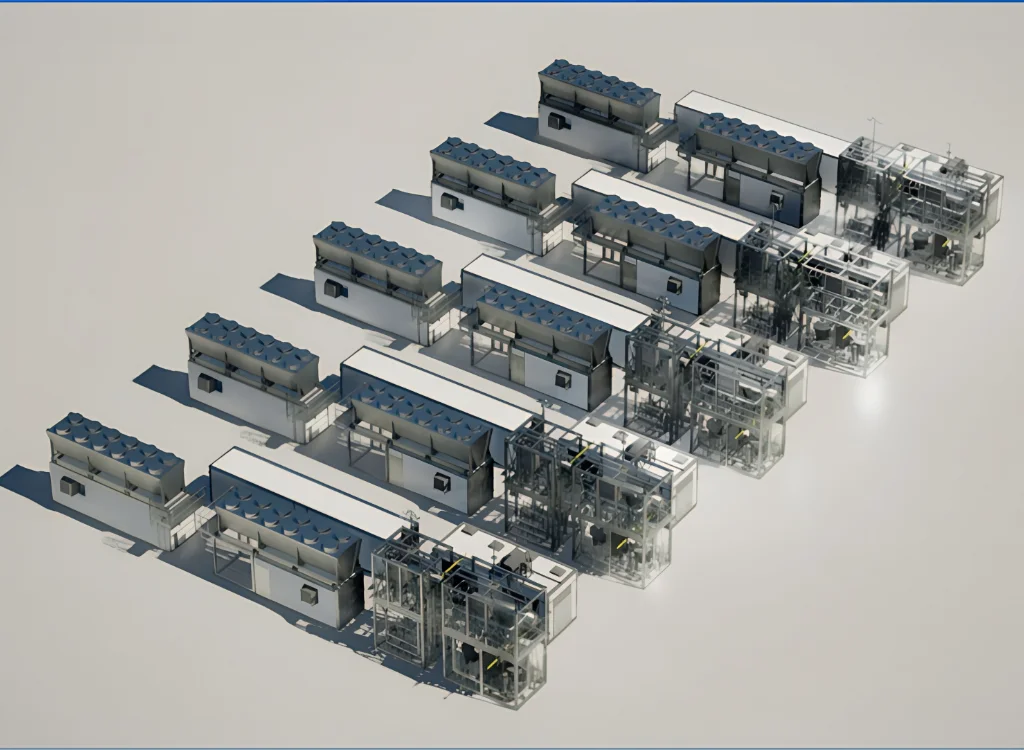
How the R-GEN.P Hydrogen Generator Works
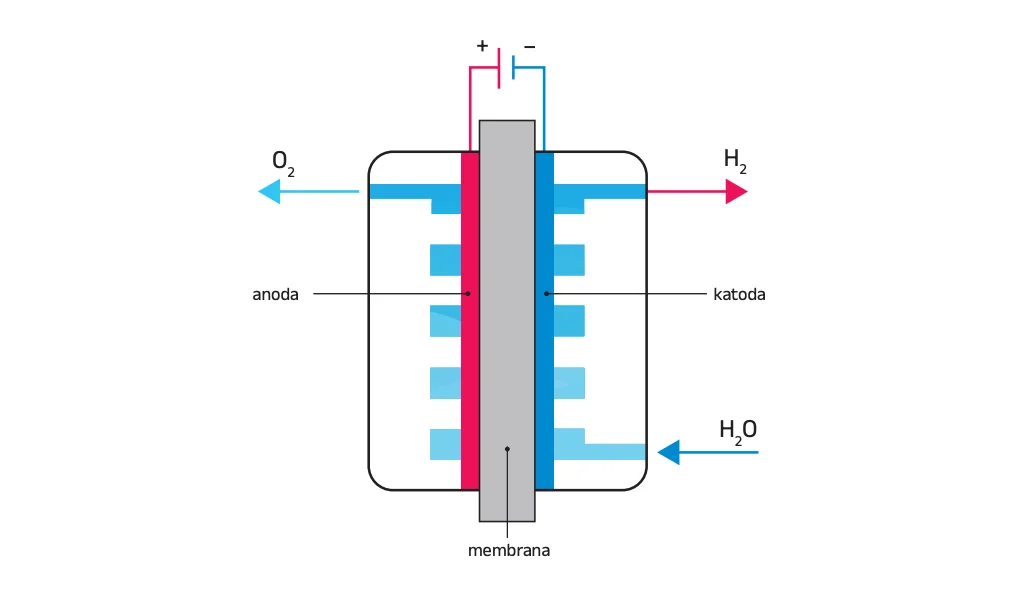
The operation of hydrogen generators R-GEN.P is based on high-performance PEM (Proton Exchange Membrane) electrolysis technology. Electrolysis of water is the process of decomposing water (H₂O) into hydrogen (H₂) and oxygen (O₂) using an electric current. PEM technology is distinguished by the fact that the production of hydrogen does not use a strongly alkaline electrolyte as in alkaline technology, but only ultrapure water. The role of the electrolyte in electrolyzers of the PEM type is performed by an ion-exchange membrane combined with electrodes: positive (anode) and negative (cathode) placed in a stack. On the cathode there is hydrogen evolution, while on the anode there is oxygen evolution. Thanks to the use of a gas-impermeable membrane tightly separating the electrodes, hydrogen and oxygen do not mix with each other, which guarantees very high hydrogen purity and increases the safety of the entire process. To produce 1 kg of hydrogen requires about 9 litres of water and slightly more than 54 kWh of electricity.
R-GEN.P Design
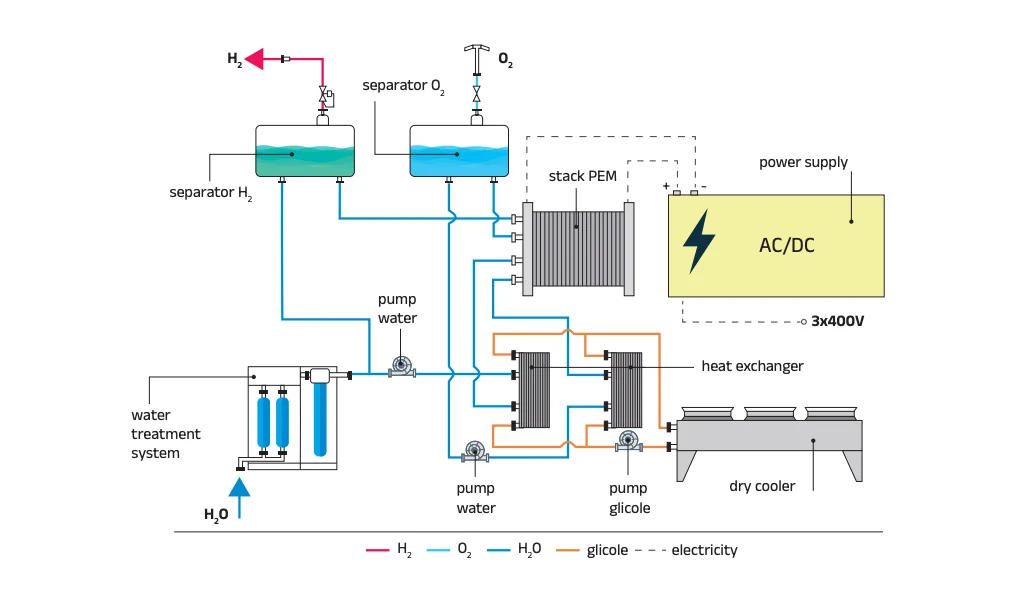
The proven system concept is based on the Modulyser solution from Elogen, a leading French supplier of high-performance stacks for electrolysers. The hydrogen generator R-GEN.P uses the PEM-type stack to perform water electrolysis. Ultrapure water is pumped through the stack. It serves not only as an essential component of the electrochemical reaction, but also as a transport medium and coolant. The water circulates in two separate loops: anodic and cathodic, carrying the produced gases and removing heat from the stack. Oxygen and hydrogen are separated from the water in dedicated separators and directed to the rest of the system, for example to a compressor or low-pressure storage. The degassed water is cooled and reused in the electrolysis process. The system may include one or more stacks, which ensures excellent scalability and dynamic operation.
Delivery Scope of Hydrogen Generators R-GEN.P
Standard Equipment
- Electrolyzer
- Cooling system
- Rectifier
- Water treatment system
- Container
- Preliminary gas dryer
- Nitrogen purge system
- Control system including touch control panel and Communication interface
- Safety systems
Additional Equipment
- LV/MV transformer
- Heat recovery system
- Hydrogen purification system
- Hydrogen Compressor (> 30 bar)
- Hydrogen storage R-PACK
- Certified gas analyser
- Certified gas flowmeter
- Low temperature insulation (below -20°C)
- Mobile application enabling remote monitoring of process parameters from any location
Services and Maintenance
- Transport and unloading at site
- Additional maintenance for storage
- Making connections between system components
- Connecting the system to utilities
- Participation in commissioning
- Training of personnel
- Periodic maintenance and servicing
The Main Advantages of R-GEN.P Hydrogen Generators
Durability: Design based on proven components and high standards of project implementation at Rockfin are a guarantee of long-term reliability of R-GEN.P generators.
Fast Response: The device is one of the few on the market that allows for a rapid change in performance in just a few seconds.

Flexibility: The output of R-GEN.P hydrogen generators is adjustable in a range of 10–100%, with the possibility of short-term overload up to 110%.
High Efficiency: Electrolyzers in R-GEN.P achieve one of the highest efficiencies available on the market. To generate 1 kg of hydrogen from water, only 54 kWh of electrical energy is used.

High Purity of Hydrogen: R-GEN.P generators offer significantly higher hydrogen purity than alkaline electrolyzers, which translates into a higher level of safety and lower costs for preparing hydrogen for use in fuel cells, for example.
Compliance with EU Directives and Industry Standards
R-GEN generators are CE marked and manufactured in accordance with the following Industry Directives and Standards:
- MD 2006/42/EC – Machinery Directive,
- PED 2014/68/EU – Pressure Equipment Directive,
- EN 61508 – Functional safety of electrical/electronic/programmable electronic safety-related systems,
- EN 61511 – Functional safety – Safety instrumented systems for the process industry sector,
- EN 12100 – Safety of machinery – General principles for design – Risk assessment and risk reduction,
- EN 60204-1 – Safety of machinery – Electrical equipment of machines,
- EN 1127-1 – Explosive atmospheres – Explosion prevention and protection,
- EN 60079 – Explosive atmospheres (series of standards for electrical equipment used in hazardous areas),
- EN 1090 – Execution of steel structures and aluminium structures,
- EN 764-7 – Pressure equipment – Safety systems for unfired pressure equipment,
- EN 13445 – Unfired pressure vessels,
- ASME BPVC VIII – Rules for Construction of Pressure Vessels,
- ISO 22734 – Hydrogen generators using water electrolysis,
- ASME B31.12 – Hydrogen piping and pipelines,
- EIGA DOC 15 – Hydrogen installations,
- EIGA DOC 211 – Hydrogen vent systems for commercial applications,
- EIGA DOC 121 – Hydrogen pipelines,
- ISO 14687 – Hydrogen fuel quality.
Example Hydrogen Generators – R-GEN P Series
R-GEN.P.5000.8.30
- Nominal Power: 5000 kW
- Capacity: 1000 m³/h
- Nominal Pressure: 30 barg
- LHV Stack Efficiency (BoL): 68,0%
- Capacity Control Range: 10–100%